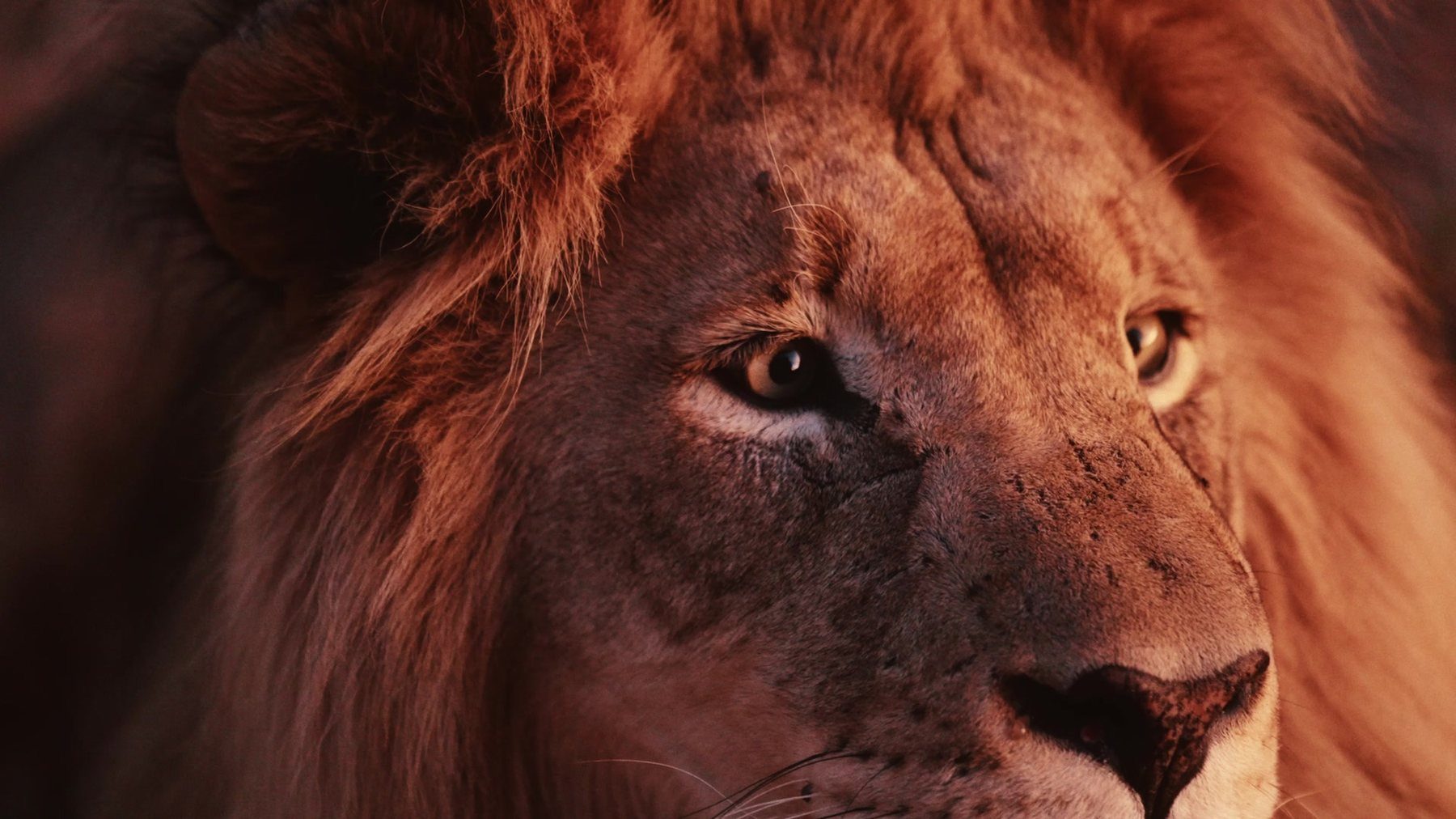
wildlife footage is hard to get and easy to ruin in the grade. you wait hours for an animal to step into the light, and then a heavy look turns it into a screensaver.
we've graded a lot of animals over the years, from lions to a whale seen from above, and we kept making the same mistakes until we didn't.
fur isn't skin
a lot of grading advice is built around people: skin tones, the skin line on the vectorscope, keeping faces healthy. none of that applies to a lion.
fur and feathers have their own colour, and that colour is the point. a lion's mane goes from cream to deep rust. an arctic fox in summer is a mix of grey and brown that can look dull if you're not careful. let the animal keep its own colour. don't warm everything up because warm "looks cinematic", and don't neutralise it because it doesn't look like skin.
greens go first
almost every wildlife shot is full of plants, and greens are the first thing to break. push saturation and the grass turns neon long before the animal looks rich.
so pull green saturation down, not up. a hue vs saturation curve on the greens and yellow-greens does most of the work, and nudging the yellow-greens toward olive helps too: real leaves are more muted than the green your camera thinks it saw. keep an eye on the soft background behind the animal. it's there to hold the animal, not to fight it.
let it stay a little dark
animals move at dawn and dusk. that's when the light is low, warm and directional, and it's also when the footage feels most alive. so we keep it there.
our grades sit a little under, and on wildlife this matters even more. don't lift the whole frame so you can see every leaf. keep the shadows deep, let the animal come out of them, and if you need to, use a soft window to bring a little light into the eyes. we'll take a dark frame with a bit of life in the eyes over a bright flat one.
long lenses and haze
most wildlife is shot on long lenses, through a lot of air. that means haze, lifted blacks and low contrast, especially in the distance.
add contrast carefully. a little goes a long way, and too much makes fur look crunchy and noisy. keep some of the haze too: it's what gives the shot depth. a bear standing in soft morning haze should still feel like morning.
grade the trip, not the shot
a wildlife sequence is usually many shots from different hours, sometimes different days. grade one hero shot first, then match the rest to it: same black level, same feel in the greens, same warmth in the light. if a shot is from a different time of day, let it be different, but make it feel like the same trip.
that's how we graded every wildlife frame on this site, with the same coolgrades powergrade we use on people and landscapes. drag the line on each one above to see where it started.
ricardo & camille